
How to deal with roof tile corrosion
When the rainy season arrives, a leaking roof is certainly a nuisance. Besides water seeping into our house or rooms, the roof frame and ceiling will rot if this happens continuously. Before repairing a damaged roof, we need to understand the causes of damaged roof coverings (roof tiles). Damage is generally caused by several factors, including:
1. Age Issues
This problem is closely related to the roof tile material. Because it doesn't meet the criteria for a good roof covering, over time, the tiles can crack, crumble, or become porous, creating gaps in the roof. They can even break easily during installation due to being stepped on by installers.
2. Falling objects can also cause roof tiles to break, especially if the material is fragile or weak. Exposure to shocks or strong winds (natural conditions) can also cause moss to grow on the roof tiles, which can lead to cracks and water seepage. The solution is to identify the source of the damage. If the damage is minor and only partial, complete repairs are not necessary. Only the damaged area, for example, if a tile is broken, can be replaced with a new one.
Be careful if you've already renovated or repaired your roof to prevent the same mistakes from happening again. Avoid haphazard and improper repairs. These can cause long-term leaks because they are temporary and not a solution to the leak problem.
Patching a leaking metal roof using the right technique
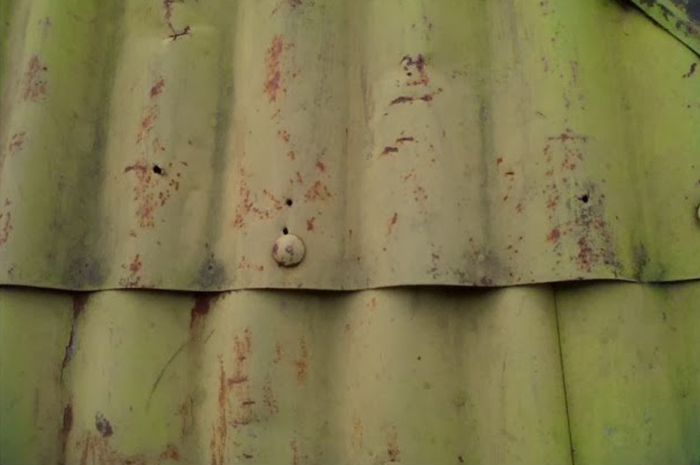
Roof leaks are caused by the metal's tendency to corrode or rust due to age or other factors. Corrosion often occurs at the edges, also at the joints between roof tiles and above the purlins, around the screws. If even a small leak is left untreated, the corrosion will quickly spread, resulting in a larger leak or even the roofing sheeting collapsing.
If a roof leak occurs, the easiest and most practical solution is to replace it with a new one, but this can be quite expensive. However, if you're willing to put in a little effort and patch it properly, the leak can be resolved. A patch can last for about two years.
Now let's prepare the materials:
- Waterproofing liquid/solution (commonly known as No Drop, Plintkote, Nipon Elastex, and others)
- Fiberglass (met 455) widely available at hardware stores
- HCL solution (available at chemical stores; if unavailable, caustic soda dissolved in water can be substituted)
- Iron paint
Procedure:
- Clean the zinc surface to be patched with a wire brush, removing any rust.
- Then clean with HCL solution.
- Once completely clean and dry, paint with iron paint.
- Once the iron paint is dry, coat it with waterproofing and fiberglass thoroughly.
- Then paint again with iron paint. The paint color can be matched to the zinc color.
Good luck!